
Do you have a resource to recommend for The CPR Hub? Please reach out and we will review it for future updates!
More Resources
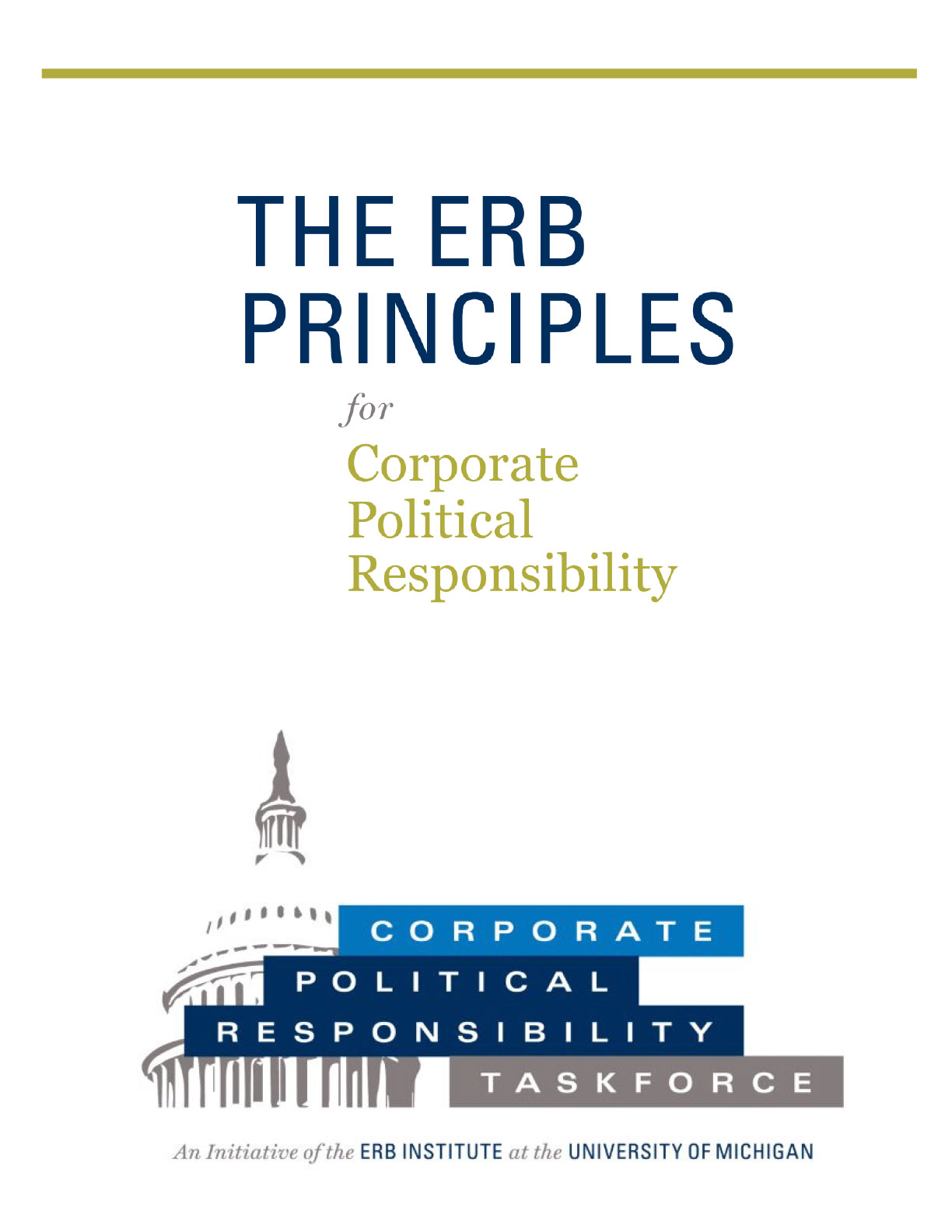
This article introduces the Erb Principles for Corporate Political Responsibility (CPR), a framework designed to help companies align political influence with long-term system health, democratic legitimacy, and responsible governance. The principles emphasize legitimacy, responsibility, accountability, and transparency as foundational standards for evaluating lobbying, political engagement, and broader public affairs practices in increasingly polarized environments.
This report presents robust global data showing that democratic erosion—especially in advanced economies—is increasingly tied to higher costs of capital and greater economic volatility. It finds that more polarized environments tend to experience elevated equity risk premiums and reduced investment, posing long-term financial risks. The author urges businesses and investors to proactively incorporate these risks into their strategic planning, treating political instability as a material driver of market performance not just a political issue.
The Good Lobby Tracker assesses the major corporate political responsibility initiatives, from sustainability frameworks to ESG ratings, to enhance their transparency, accountability and action-ability. It is designed to help business practitioners, investors, civil society advocates, regulators and other stakeholders select the best methods and standards when assessing the corporate political footprint of companies.
This academic article revisits stakeholder theory, arguing that organizational purpose should integrate value creation across stakeholders rather than prioritize shareholder primacy alone. It refines the theoretical foundations of stakeholder governance and connects purpose to competitive advantage, institutional trust, and long-term sustainability within complex economic and civic systems.
Bain's thoughts on how CEO's can best navigate the current environment to achieve sustainability goals.
The Framework on transformational governance provides guidelines to help companies deepen business values and strategies, policies and operations and internal and external relationships. The Framework applies to corporate functions from government relations and public affairs to legal and compliance and focuses due diligence processes applied to investment risks and opportunities and environmental and social considerations. The Framework helps to better align governments, civil society and businesses towards a common agenda of leaving no one behind.
Urges business to include climate policy advocacy aligned with their sustainability strategies. Advocates for science-based climate actions, including supporting legislation aligned with the 1.5°C temperature limit and achieving net-zero emissions by 2050, emphasizing the importance of lobbying efforts aligning with these objectives.

